
Introduction
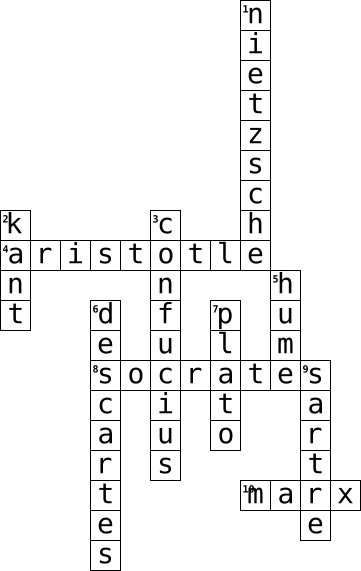
Picture yourself in a quiet room, a cup of tea in hand, and the murmur of distant conversations about what it means to live a good life, to know what’s true, or to shape a just society. Philosophy, at its heart, is just that—a conversation stretching back millennia, where thinkers grapple with questions that never fully leave us. A philosopher isn’t just someone buried in books or ancient scrolls; they are those curious souls who dare to ask the deep questions about existence, knowledge, values, and meaning.
The ideas born in these conversations form the backbone of much that surrounds us today—our laws, ethics, education, and even how we see ourselves. From Socrates, who roamed the streets of Athens challenging passersby to question their assumptions, to Sartre, who insisted that freedom is both a gift and a burden in the modern world, philosophy weaves through history like an unbroken thread.
In this article, we’ll journey through time and thought, meeting a selection of great minds who shaped the way we understand the world. Each philosopher’s story is not just about their ideas, but about the moments and cultures that shaped them, the controversies they sparked, and how their legacies live on in contemporary debates. So, let’s walk together through philosophical history—one question, one insight, one human story at a time.
Socrates: The Founding Father of Western Philosophy
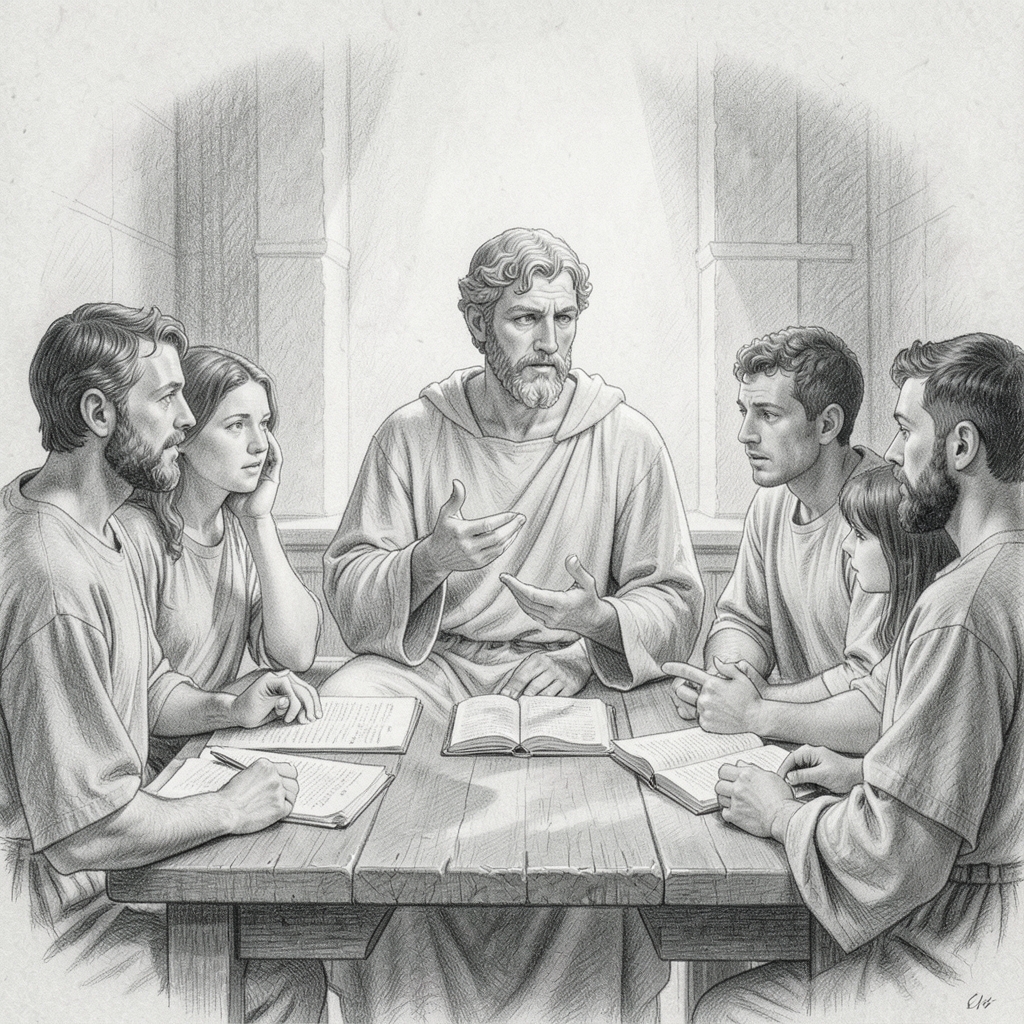
Imagine the bustling streets of ancient Athens, alive with merchants, politicians, and thinkers. Among them walked Socrates, a man without written works, known not for grand speeches or fiery rhetoric but for the relentless questions he posed. In a city pulsing with democracy and debate, Socrates planted the seeds of Western philosophy—not by giving answers, but by challenging others to think deeper.
His method was simple yet revolutionary: ask probing questions until assumptions cracked open. This “Socratic method” was less about proving a point and more about uncovering truth through dialogue. Picture a conversation where each question draws you closer to understanding, forcing you to reconsider what you thought you knew. For Socrates, ethics wasn’t abstract—it was about how to live well, how to seek virtue as the highest good.
Though his style made him famous—and infamously sentenced to death—his legacy outlived him through his students. Plato immortalized Socrates’ spirit, ensuring that this humble questioner would inspire centuries of thinkers. Today, his approach still teaches us the value of critical thinking and humble inquiry, reminding us that wisdom begins with admitting what we don’t know. In an age flooded with information, Socratic questioning remains a powerful tool to cut through noise and invite genuine understanding.
Plato: The Philosopher of Ideals and Politics
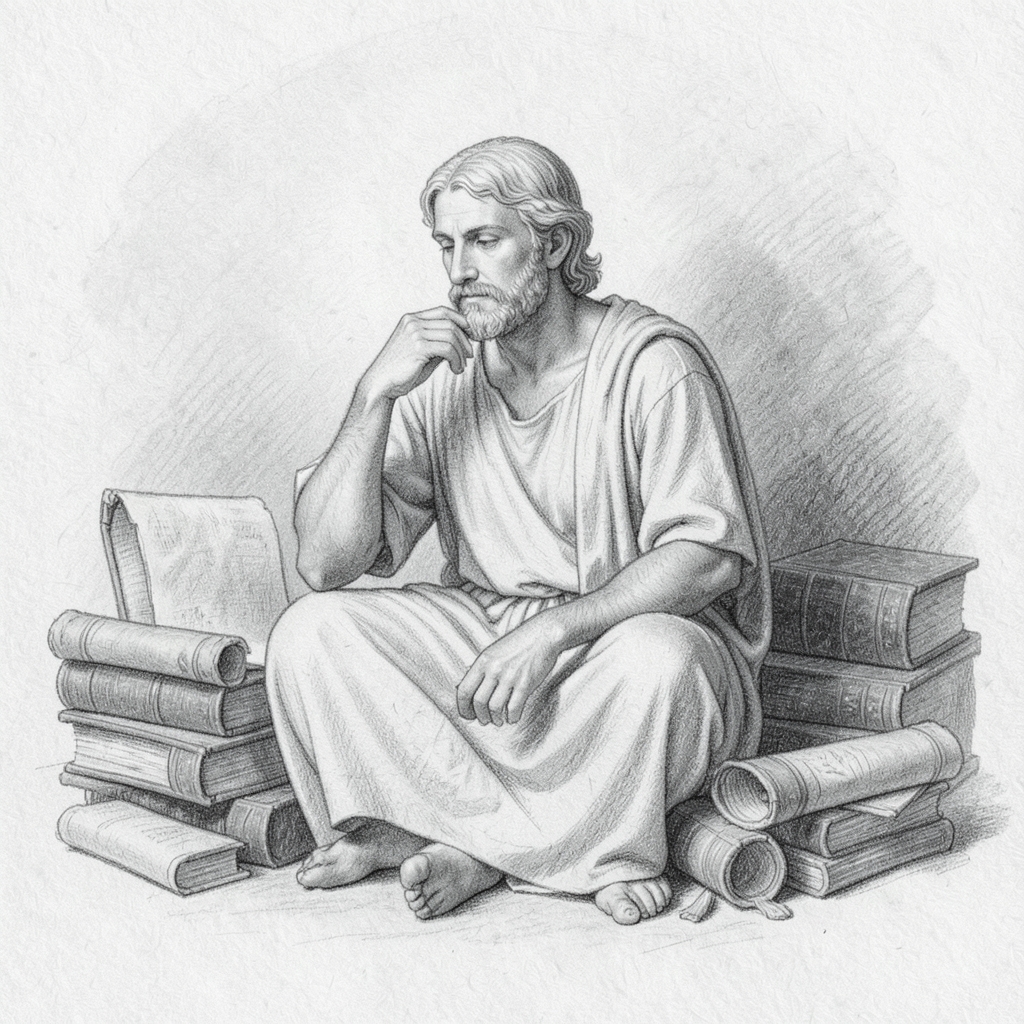
Step into ancient Athens, a city buzzing with political drama and intellectual ferment. Here, amid the shifting alliances and debates, Plato—the devoted student of Socrates—laid the groundwork for a philosophy that still echoes today. Founding the Academy, one of the earliest institutions of higher learning, Plato wasn’t just capturing ideas; he was creating a space where minds could meet and challenge what it means to live justly.
At the heart of Plato’s thought lies the Theory of Forms. Imagine a world beyond what your eyes can see—a realm of perfect, unchanging ideas. According to Plato, everything we experience—the chairs we sit on, the trees we pass—are mere shadows of these flawless “Forms.” This vision turned metaphysics into a quest to find the true essence behind life’s fleeting appearances.
But Plato didn’t stop there. In The Republic, he sketched an ideal state, a society ruled by philosopher-kings who understand justice not as convenience, but as harmony between reason, spirit, and desire. This was no mere political daydream; it was a call to reflect on how societies balance power, knowledge, and morality.
Plato’s influence ripples through centuries, shaping ideas about education, knowledge, and governance. His call to seek ideals pushes us to consider: What does a just society look like today? How do our educational systems cultivate the wisdom needed to lead? In a world often mired in complexity and compromise, Plato’s vision invites us to keep our eyes lifted toward those timeless principles—even if the path there remains forever just out of reach.
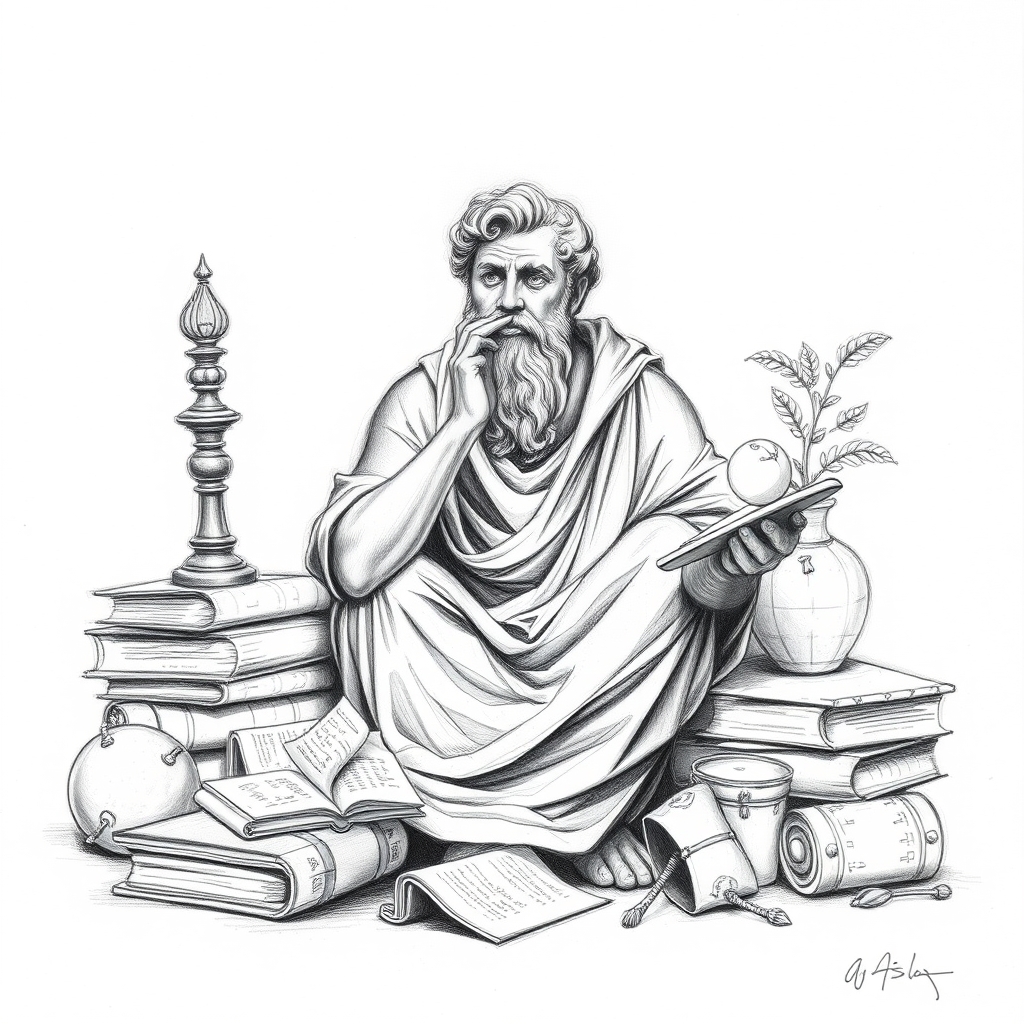
Aristotle: The Empiricist and Systematizer
Step into the world just after Plato, where abstract ideas still floated high, but a new approach was stirring. Aristotle, Plato’s brilliant student and tutor to Alexander the Great, shifted the lens from lofty ideals to the world you could see, touch, and study. Athens was changing, and so was philosophy—moving from pure thought to careful observation.
Aristotle’s key move was grounding knowledge in what our senses reveal. He laid out the foundations of logic with his syllogism—a simple but powerful way to reason, like a compass guiding thought through complexity. Beyond logic, he argued that ethics wasn’t about chasing some unreachable perfect virtue but about finding balance through practical wisdom—knowing how to live well, day by day.
His curiosity didn’t stop at human behavior. Aristotle explored biology, cataloging animals with the precision of a naturalist. His political theory looked at cities and peoples as living organisms, fostering ideas still echoed in today’s discussions on governance and community.
What makes Aristotle resonate now is his role as a bridge to modern science. The scientific method—observe, hypothesize, test—carries his imprint. Even in ethics and politics, his mix of empirical evidence and practical reasoning shapes debates and decisions centuries later.
Through Aristotle, philosophy steps into the world, insisting that understanding grows not just in the mind but in dialogue with the world around us. It’s a reminder that ideas matter most when they connect to living experience—and that insight often starts with paying close attention.
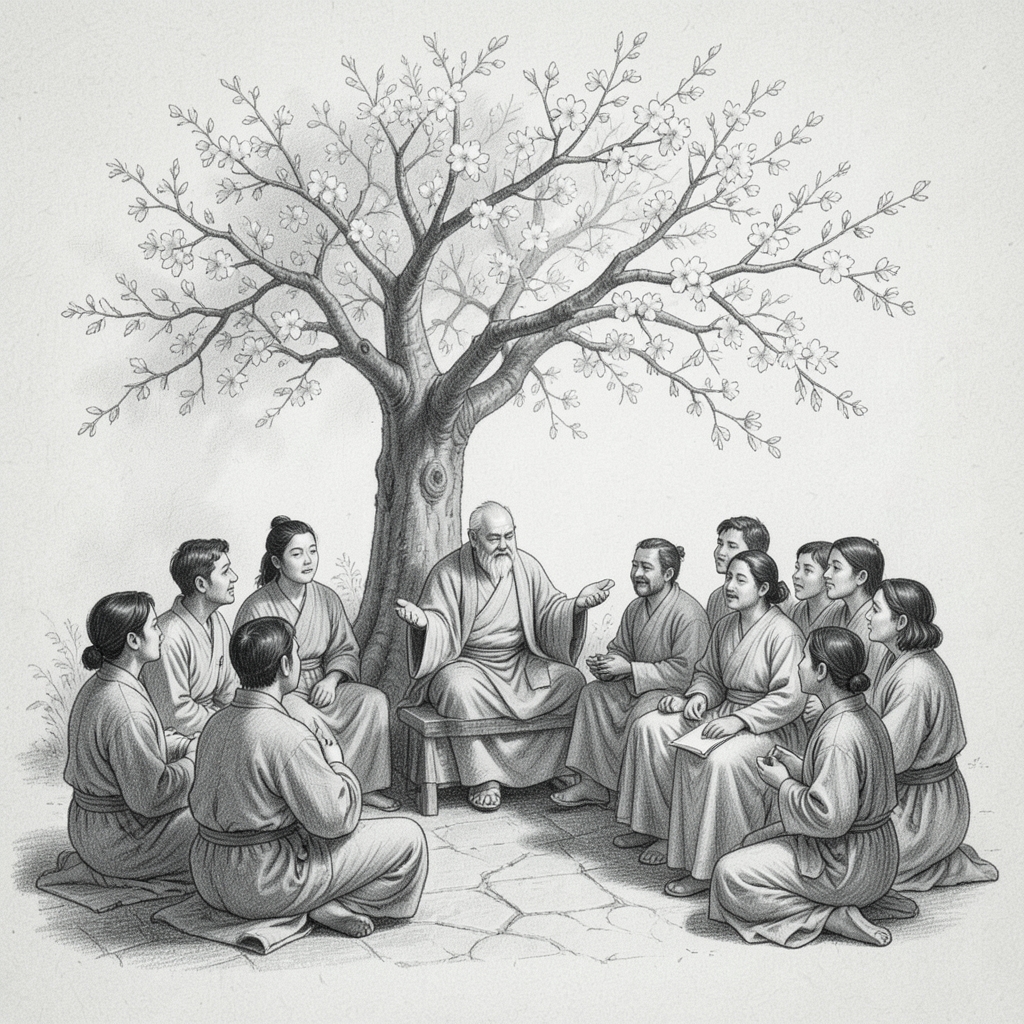
Confucius: Eastern Philosophy of Ethics and Society
Step back to ancient China, around 2,500 years ago, when the Zhou dynasty was wrestling with social upheaval. Amid this clutter of shifting power and unrest, Confucius emerged—not as a warrior or king, but as a teacher, offering a vision of harmony rooted in ethics and community. He wasn’t spinning abstract theories detached from life; instead, his philosophy was a practical guide to living well with others.
At the heart of Confucius’s thought lies the concept of li—the proper rituals and customs that shape respectful relationships. These aren’t just formal ceremonies; they’re the rhythms that hold society together, from family meals to court etiquette. Alongside li stands filial piety, a deep respect for one’s parents and ancestors, weaving a sense of duty and gratitude through daily life. It’s a recognition that who we are is inseparable from where we come from.
But Confucius didn’t stop at social order. He championed ren, often translated as benevolence or humaneness—a quality that colors every interaction with kindness and empathy. For him, good governance wasn’t about strict laws or harsh punishments, but leaders embodying ren, inspiring their people by moral example rather than fear. This idea resonated deeply in East Asia, forming the backbone of ethical discussions and leadership models for centuries.
Education held a special place in Confucius’s philosophy, too. He believed self-cultivation was a lifelong journey—a thoughtful process of reflection, learning, and improvement. In this sense, philosophy was not only about grand ideas but about shaping character and community from the inside out.
Today, Confucius’s legacy endures far beyond ancient China. His emphasis on respect, responsibility, and compassion continues to influence East Asian cultures, informing everything from family dynamics to political leadership. In a modern world grappling with division and uncertainty, his teachings invite us to pause and consider how empathy and ritual can build stronger, kinder societies.
Through Confucius, we glimpse a philosophy alive with human concern—one that asks not just how we think, but how we live together. It’s a reminder that ethics begins at the dinner table and radiates outward, shaping the fabric of community.
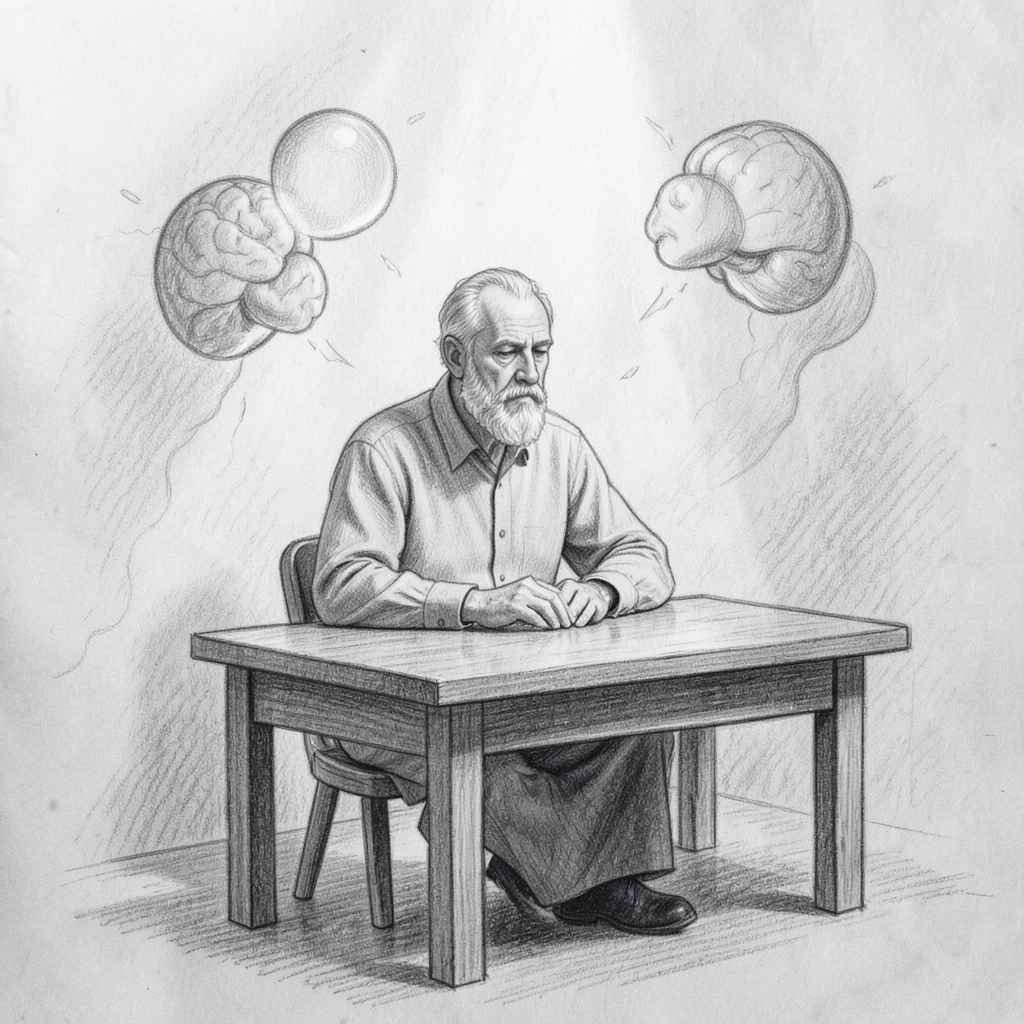
René Descartes: Father of Modern Philosophy and Rationalism
Imagine a world caught between the fading shadows of medieval thought and a rising tide of scientific curiosity. It’s the 17th century—a time when old certainties were crumbling, and thinkers were eager to rebuild knowledge from the ground up. Enter René Descartes, a French philosopher who wanted to find something absolutely certain to serve as the firm foundation for all knowledge. His quest wasn’t just academic; it was personal, a search for clarity amid doubt.
Descartes famously introduced the “method of doubt,” a way of questioning everything that could possibly be doubted, stripping away assumptions until only what was undeniably true remained. This radical skepticism led him to his foundational insight: “Cogito, ergo sum”—I think, therefore I am. In that simple phrase lies a profound acknowledgment that the act of doubting or thinking proves the thinker’s own existence. It’s a moment of self-awareness that changed how we understand consciousness.
But Descartes didn’t stop at the mind. He also proposed a clear separation between mind and body—what we now call Cartesian dualism. According to him, the mind is a non-material thinking entity, distinct from the physical body, which functions like a machine. This division posed big questions about how these two interact, questions that still echo in philosophy and cognitive science today.
Descartes’ approach laid the groundwork for modern philosophy, shifting focus from accepted tradition to individual reason as the path to truth. His influence spreads far and wide—from epistemology, where his insistence on clear, distinct ideas shapes how we understand knowledge, to cognitive science, which grapples with the nature of mind and brain.
Yet, it’s important to clear up some misconceptions. Descartes wasn’t a lone rationalist dismissing the senses outright; rather, he sought a reliable foundation from which real knowledge—including that gained through the senses—could grow. His work invites us to embrace doubt thoughtfully, but not cynically, and to see thinking itself as the starting point of our journey to understanding.
In a way, Descartes asks us: what can you hold onto when everything else falls away? His answer—the certainty of your own thinking—remains a cornerstone of philosophy and a prompt to reflect on what we trust and why.
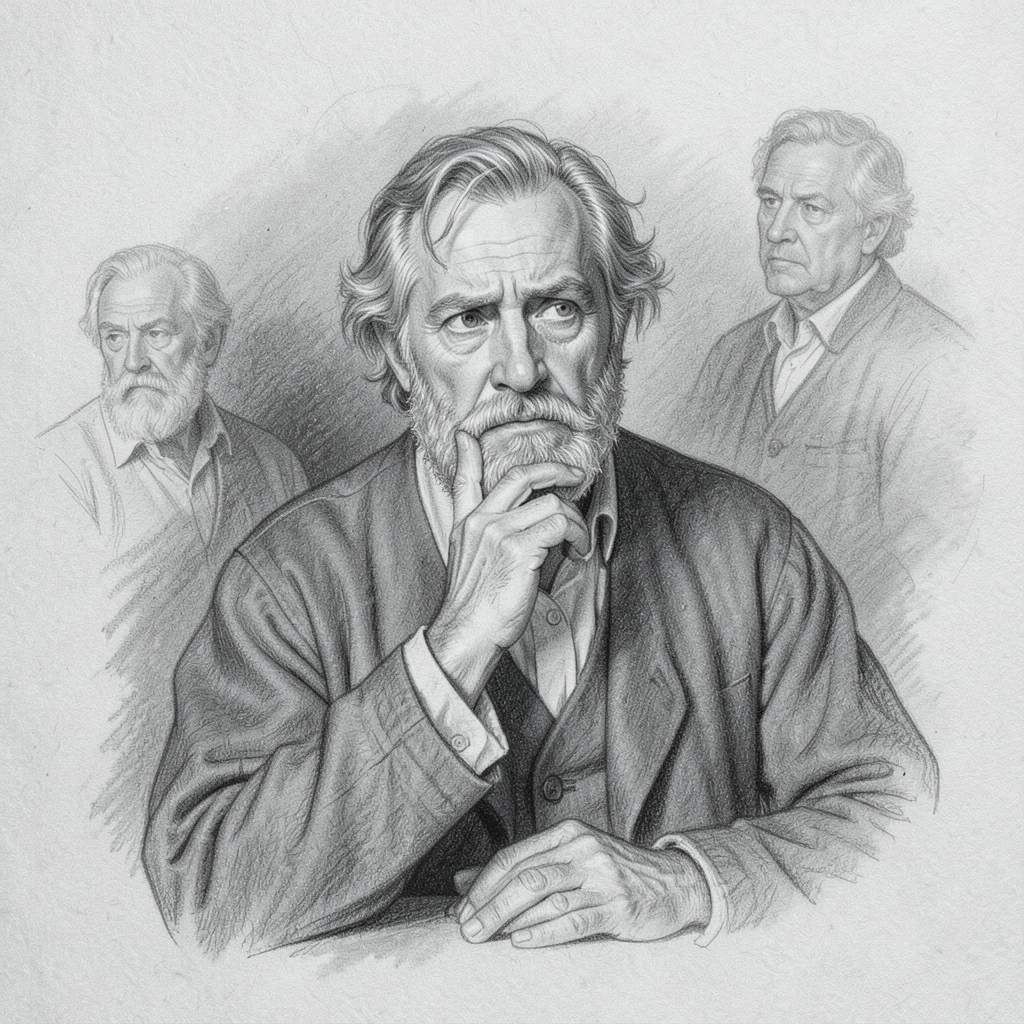
David Hume: Skepticism and Empiricism
Step into 18th-century Scotland, where the glow of the Enlightenment kindled minds eager to question the old certainties. David Hume stood at the heart of this transformation, a thinker who dared to challenge the bedrock ideas of cause, self, and even religion itself. His world was one of observation and experience—not abstract speculation but the sharp edge of what we can actually know.
Hume’s biggest claim is simple, yet unsettling: our ideas come from experience, and beyond that, certainty dissolves. He showed how we never directly perceive “cause and effect”—instead, we watch one event follow another and assume a connection, but this is habit, not proof. This “problem of induction” still echoes in today’s scientific debates: How do we justify expecting the future to mirror the past?
He pushed skepticism further, questioning the very idea of a permanent “self.” To Hume, what we call the self is just a bundle of fleeting sensations and perceptions, slipping through our fingers like sand. His critiques shook the foundations of metaphysics and left a lasting mark on how we think about identity.
And then there’s his bold stance on religion. Hume scrutinized miracles with clear-eyed doubt, arguing that they clash with everything we learn from experience. His famous essays nudged Western thought toward secularism, inviting us to weigh faith with reason’s scale.
Today, Hume’s influence is everywhere—from the way scientists frame hypotheses to how philosophers debate knowledge and belief. His skeptical lens doesn’t close the door on understanding; rather, it keeps our eyes wide open and reminds us that certainty is rare and precious. In a world flooded with information, Hume’s voice urges us to pause, question, and marvel at what we truly know—and what we only think we do.
Immanuel Kant: Synthesizing Rationalism and Empiricism
Step into late 18th-century Europe, a time buzzing with ideas but also riddled with doubt. Philosophers wrestled with questions that felt impossible to answer: How do we really know what we know? Can reason and experience ever fully explain the world? Enter Immanuel Kant, a thinker determined to bridge the gap between two schools of thought that had long been at odds—rationalism, which prizes reason, and empiricism, which depends on sensory experience.
Kant’s landmark work, Critique of Pure Reason, is often seen as a game changer. Picture him as someone laying down a new map for how knowledge travels—not tracing just the path of the mind or the senses alone, but forging a route where both meet. He coined the term “transcendental idealism” to describe this middle ground, arguing that while the world we experience shapes our understanding, our mind actively structures that experience. It’s like saying, yes, we see the forest, but our mind also chooses which trees stand out.
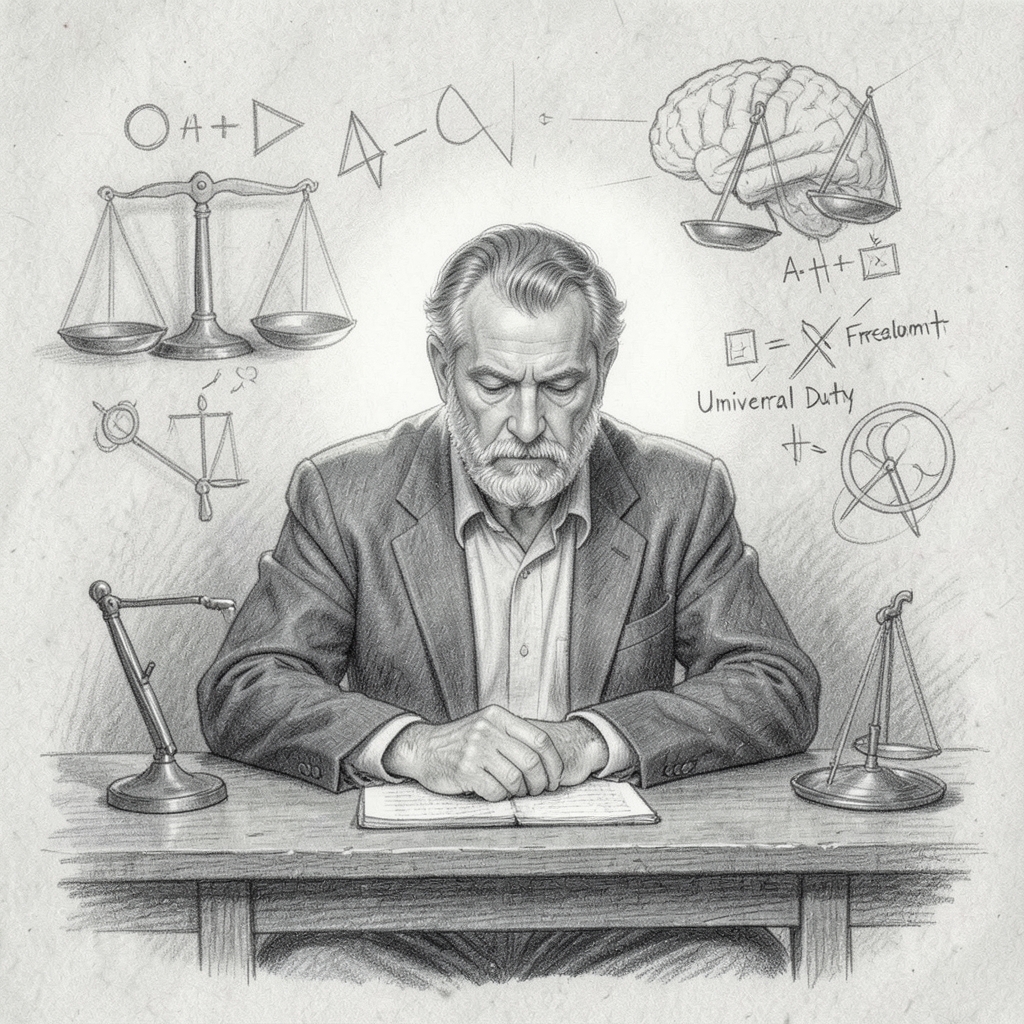
But Kant didn’t stop at knowledge; he also tackled how we decide what’s right and wrong. His moral philosophy introduced the “categorical imperative”—a simple but powerful idea: act only according to principles you would want everyone to follow. This isn’t about consequences or personal gain but about grounding morality in universal respect and duty. Through this, Kant brought forward notions of freedom, autonomy, and human dignity—concepts that ripple through today’s discussions on ethics and human rights.
Why does Kant still matter? Because his work sets the stage for modern discussions on law, ethics, and how we understand individual freedom while living in society. Whether it’s debates on justice or human rights, the Kantian framework quietly shapes the rules we live by. His synthesis of reason and experience invites us to think critically about what it means to know—and to choose—responsibly in a complex world.

Friedrich Nietzsche: Critique of Morality and Culture
Step back into 19th-century Germany—a world brimming with industrial growth, shifting social norms, and a fading belief in old certainties. Amid this changing landscape, Friedrich Nietzsche emerged as a thinker who didn’t just question tradition; he ripped the very foundations of morality and religion apart. Nietzsche wasn’t interested in polite debates—he aimed to shake the soul of Western culture.
At the heart of Nietzsche’s philosophy lies a fierce critique of Christian morality and the idea of self-denial championed by Kantian ethics. He saw these “ascetic” values as life-denying—a set of rules imposed to suppress human vitality and creativity. Instead, Nietzsche proposed a radical alternative: the Übermensch, or “Overman.” This figure embodies the will to power—the drive not just to survive but to thrive, to shape one’s own values rather than inherit them.
Nietzsche’s provocative idea of eternal recurrence asks us to imagine living our life over and over, exactly the same way, for eternity. It’s a challenge to affirm life so fully that we embrace every moment, including pain and struggle, without regret. This notion pushes us to rethink how we find meaning beyond conventional moral codes.
But Nietzsche’s revaluation of values wasn’t just philosophical gymnastics. It was a gut-level call to confront modernity’s crises—the loss of faith, the rise of nihilism, and the fragility of identity in a fast-changing world. His sharp critique encourages us to question accepted truths and to embrace the messy, often uncomfortable process of forging our own path.
Today, Nietzsche’s influence ripples through existentialism, postmodernism, and cultural criticism. His work invites us to wrestle with questions that are no less urgent: How do we create meaning in a world without absolute truths? What does it mean to live authentically? And how do we confront the tension between individual freedom and societal norms?
In walking alongside Nietzsche’s thought, we glimpse a thinker unafraid to stare into the abyss—and to urge us to do the same, with eyes wide open.
Karl Marx: Philosophy, Economics, and Social Change
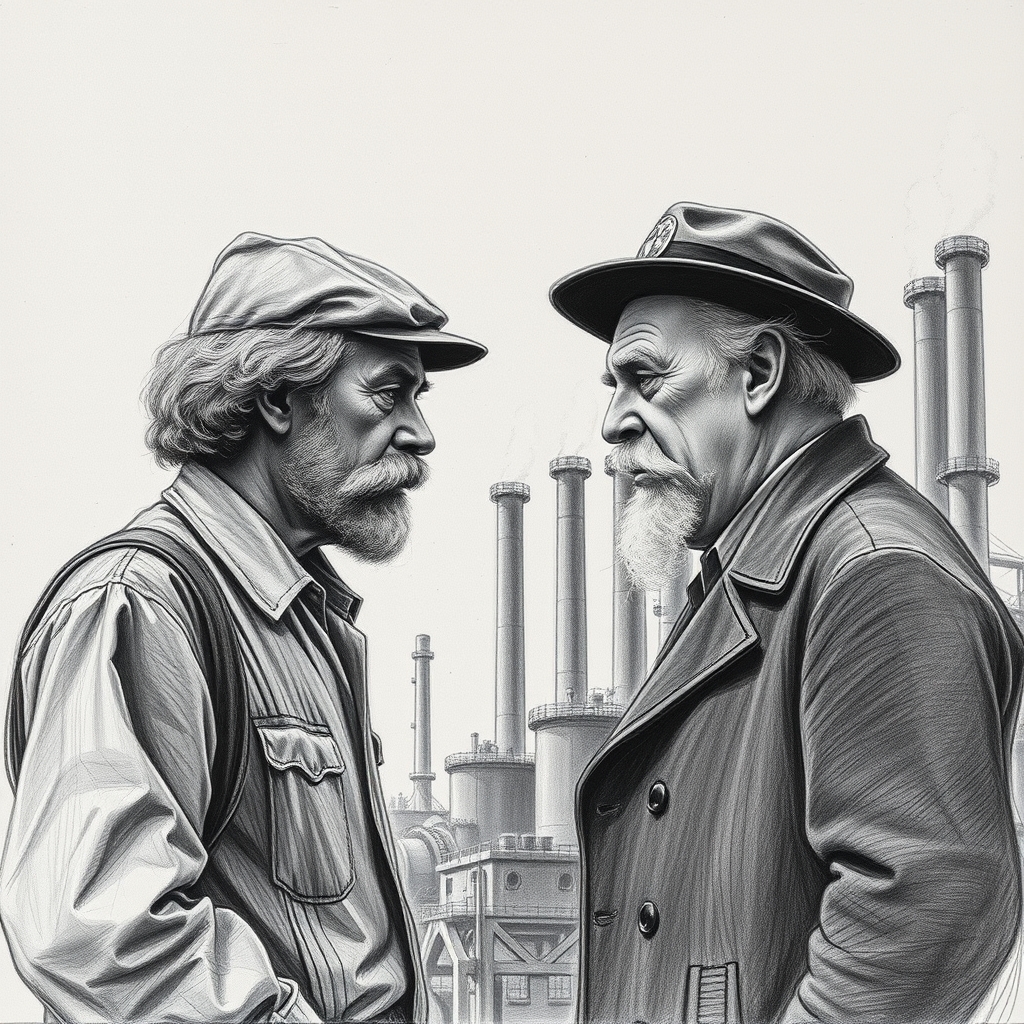
Picture 19th-century Europe, a continent transforming under the relentless hum of machines and the swelling tide of factories. Cities burst with workers, crowded and restless, caught between wealth and want. Karl Marx stepped into this world with a sharp eye and a fierce mind, determined to untangle the forces shaping society—and to challenge the status quo.
Marx’s philosophy wasn’t just abstract thought; it was born from the clatter of the Industrial Revolution and the grinding inequities it unleashed. He saw history as a story of conflict—between classes, between those who own and those who toil. This idea, known as historical materialism, looks beyond kings and battles to the material conditions that shape human life: the tools we use, the work we do, and the social systems we build around them.
Dialing deeper, Marx introduced dialectical materialism, a way of understanding how contradictions within society—say, between capitalists and workers—drive change. For Marx, capitalism wasn’t only an economic system; it was a live wire of exploitation, where profit depended on the labor of many, while wealth gathered in the hands of a few. His sharp critique peeled back illusions, exposing class struggle as the engine behind history’s march.
But Marx didn’t stop at analysis; he envisioned a future where this struggle would end—a society free from class divisions, where the means of production belonged to all. This was the promise of communism, a radical break from the world he saw but also a call to action for those seeking justice and equality.
Today, Marx’s ideas ripple through politics, economics, and social movements worldwide. They fuel debates on wealth disparity, workers’ rights, and the role of capitalism in shaping our global future. Whether embraced, challenged, or reinterpreted, Marx’s legacy invites us to ask hard questions about fairness, power, and the kind of world we want to build.
More than a thinker locked in history, Marx remains a mirror reflecting ongoing struggles—urging us to look closer, think deeper, and consider not just how things are, but how they might be different.
Jean-Paul Sartre: Existentialism and Marxism
Step into post-World War II France—a world trying to rebuild itself, not only physically but also morally and intellectually. Among the rubble arose Jean-Paul Sartre, a thinker who refused to accept easy answers. His philosophy was gritty and alive, wrestling with what it means to be free when the weight of history, society, and politics presses down.
Sartre’s core idea centered on radical freedom. Unlike earlier philosophers who saw human nature as fixed or predetermined, Sartre insisted that “existence precedes essence.” In plain terms, we’re thrown into life first with no blueprint, no predetermined purpose. It’s up to each of us to carve out meaning through our choices and actions. But freedom doesn’t come without its burden: along with it comes profound responsibility. We’re responsible not only for ourselves but, because our choices shape the world, for others too.
While existentialism often focuses on individual experience, Sartre didn’t stop there. He believed that individual freedom must be understood in the social and political context—and this is where Marxism entered the picture. Sartre saw capitalism as a system that restricts genuine freedom, trapping people in roles and conditions they didn’t choose. By merging Marxist social critique with existentialist ideas, he crafted a powerful call to political engagement: freedom is incomplete if it ignores the chains forged by economic and social oppression.
In his works, like Being and Nothingness and Critique of Dialectical Reason, Sartre pushed readers to recognize that freedom and oppression are intertwined. True liberation demands confronting social realities, not just abstract ideas. His philosophy encouraged active resistance, inspiring movements and thinkers who sought to challenge injustice and build new futures.
Today, Sartre’s legacy feels urgent and relevant. Questions about identity, autonomy, and political responsibility remain at the heart of debates around freedom and oppression worldwide. From discussions on systemic inequality to movements for social change, his insistence on facing uncomfortable truths and choosing to act continues to challenge us—reminding us that freedom is never free, and that the choices we make matter deeply.
Walking with Sartre through the ruins of a fractured century, we see a man who didn’t just theorize about freedom but lived it fiercely, insisting that despite everything, we remain the authors of our own existence.
Conclusion
Stepping back from this journey through time and thought, we see a vivid tapestry woven from the ideas of philosophers who dared to ask the big questions. From Socrates’ probing dialogues to Sartre’s defiant calls for freedom, these thinkers each carved out paths that still invite us to explore who we are and how we live. Their contributions—whether through ethics, politics, or metaphysics—offer contrasting but interconnected viewpoints that shape both Western and Eastern worlds alike.
What strikes us most is how deeply these ideas continue to ripple through our lives today. Philosophy isn’t just dusty old books or abstract puzzles; it’s a living conversation about how to live well, think critically, and act responsibly. Whether we’re grappling with moral dilemmas, questioning the assumptions behind our beliefs, or seeking meaning in a complex world, the legacy of these philosophers lights the way.
So why stop here? Let these stories and insights be an invitation—to revisit ancient dialogues, to walk alongside Confucius as he teaches about harmony, or to wrestle with Nietzsche’s challenging calls for self-overcoming. Philosophy, at its heart, is not a museum piece but a guide, encouraging each of us to shape our own understanding, question boldly, and find our place in the world.












-
 Jigsaw Puzzles
Majestic Stag Watercolor Jigsaw Puzzle 250 | 300 | 500 Pieces
Price range: kr 348,00 through kr 439,00 Select options This product has multiple variants. The options may be chosen on the product page -
 Jigsaw Puzzles
Art Nouveau Jigsaw Puzzle with Playful Dog in Scenic Landscape 250 | 300 | 500 Pieces
Price range: kr 348,00 through kr 439,00 Select options This product has multiple variants. The options may be chosen on the product page -
 Jigsaw Puzzles
Majestic Unicorn Watercolor Puzzle 250 | 300 | 500 Brikker
Price range: kr 348,00 through kr 439,00 Select options This product has multiple variants. The options may be chosen on the product page