
Introduction to the Concept of Harbingers
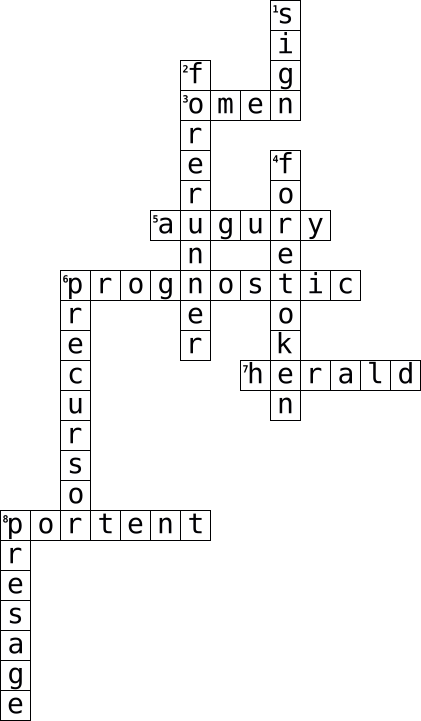
What is it about certain signs that catch our attention, whispering hints of what might come? A harbinger, at its heart, is exactly that—a messenger from the shadows, a subtle signal that points toward a future event yet to unfold. The word itself, rooted in Old French and Germanic tongues, describes a forerunner, someone or something that announces what lies ahead. Think of it as a living teaser, a nudge from the universe that invites pause and reflection.
In history, harbingers have worn many masks: a crow perched ominously on a branch, the sudden arrival of a comet blazing across a darkened sky, or even a person whose actions presage great change. These are not mere coincidences but threads in a vast tapestry of human experience, where signs serve both as warnings and as guides.
Across cultures and ages, harbingers have taken on a life of their own. They appear in ancient texts, religious sermons, and the folklore spun around campfires. We often associate them with omens or portents—cryptic clues that stir anxiety or hope. Even today, the internet pulses with questions: What does it mean when birds gather strangely? When a rare celestial event occurs, are we on the brink of transformation?
These queries reveal a deep human desire to glimpse beyond the present, to touch the unseen currents shaping our world. Harbingers are more than superstition—they are invitations. Invitations to listen closely, to attune ourselves to subtle shifts, and perhaps, to prepare for the unfolding story yet to come.
Historical and Mythological Examples
Bird Symbolism in Myth and History
Throughout the ages, birds have carried messages beyond the spoken word, their wings writing silent stories in the sky. The ancient Romans, keen observers of the natural world’s subtle whispers, turned to birds before battles, seeking signs in the flutter and flight. The direction a bird flew or the way it vocalized was more than mere chance—it was a language, a secret code offering glimpses into fate.
Among these avian messengers, the crow stands tall and dark, cloaked in mystery. Far from just a common bird, crows have been beacons of portent in countless cultures. To some, they are harbingers of death or misfortune; to others, symbols of transformation and wisdom. Their shadowed feathers and piercing eyes evoke a world where the line between life and the beyond blurs—a threshold they seem to guard with quiet authority.
Comets as Harbingers of Doom
Comets—those celestial wanderers with their blazing tails—have long been cast as cosmic heralds of turmoil. Across centuries, their sudden, unpredictable appearances in the night sky stirred a mingling of awe and dread. Kings and common folk alike read these fiery visitors as omens of upheaval, marking the fall of dynasties, the spread of plagues, or the stirring of wars.
Even in our modern age, where science maps their courses with precision, the mystique remains. Discussions in 2024 reflect this dual nature: comets as both natural phenomena and symbols imbued with meaning. Whether through the eyes of the astronomer peering through a telescope or the storyteller weaving cosmic warnings, comets hold their place as timeless harbingers—reminders that some forces move beyond our control, hinting at the vast, unpredictable tapestries of fate.
Modern Interpretations and Contemporary Examples
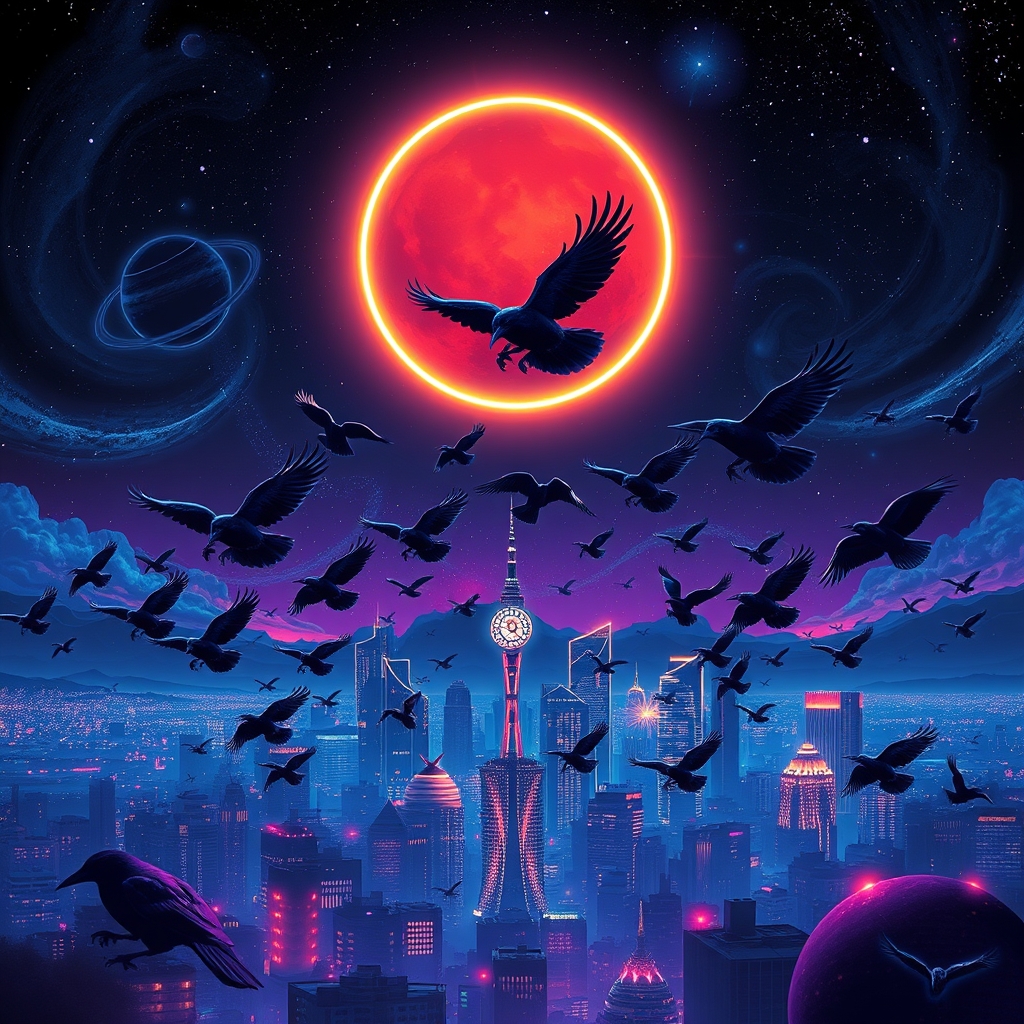
In March 2026, the skies over Tel Aviv became a stage for a curious spectacle—thousands of hooded crows gathered in swirling flocks, casting shadowy patterns against the urban skyline. For many, this sudden congregation wasn’t just an unusual natural event but a living tapestry woven with meaning, a modern harbinger stirring whispers in the city’s hum. The sight evoked old fears and fresh questions: Could these dark-winged visitors be signalling something more than mere migration? Were they nature’s quiet messengers of unsettling times amid a region already fraught with tension?
Birds, especially crows, have long perched at the crossroads of myth and reality, their behavior read like cryptic verses of a prophecy. In today’s world, where the line between folklore and fact blurs easily, such avian gatherings become mirrors reflecting collective anxieties and hopes. The 2026 Tel Aviv flocks don’t just echo ancient beliefs—they invite us to look anew, asking how we interpret the rhythms of nature in an age drowning in information but starving for deeper understanding.
Meanwhile, high above us, the 2026 solar eclipse that traced its path over the United States unfolded as a celestial marker charged with symbolism. Eclipses, age-old portents of transformation, often stir the imagination and prompt reflection on change—political, social, and personal. Experts today acknowledge that while the moon’s shadow crossing the sun is a physical phenomenon, its resonance goes beyond optics; it taps into humanity’s enduring urge to find meaning in the cosmos. In the shadow’s brief reign, people see a metaphor for upheaval or renewal, sensing that the darkening sky is a call to awaken, question, and perhaps, to prepare for what lies beyond.
Together, these modern harbingers—the murmuring crow flocks and the silent eclipse—thread a subtle narrative through our contemporary world. They remind us that signs are not just ancient relics but living symbols; that the language of omens speaks on multiple levels, blending the tangible with the intuitive. In the dance of wings and the eclipse’s fleeting shadow, we glimpse the ever-present dialogue between nature, time, and the human heart—an invitation to watch, wonder, and listen to what the unseen might be trying to tell us.
The Cultural Significance of Harbingers
Harbingers are more than mere whispers on the wind; they are threads woven through the fabric of human belief, bridging the sacred and the everyday. In the realm of religion and prophecy, they serve as both warning and guide—echoes of divine messages that ripple through time. Consider the biblical prophets whose voices announced coming floods or kingdoms’ falls, their words casting shadows that stirred faith and fear alike. These figures stand as living harbingers, their presence a reminder that the unseen often speaks through the seen.
Beyond sacred texts, harbingers pulse at the heart of popular culture—flickering in the stories we tell, the films that captivate us, and the news headlines that seize our attention. They shape collective moods, riding the waves of anxiety or hope that swell through society. When a raven crosses the path in a thriller or an eclipse looms over a dystopian tale, harbingers stir the imagination, connecting age-old symbols with modern unease. They invite us to pause and wonder: what might be unfolding beneath the surface of our known world?
In this dance between ancient belief and contemporary meaning, harbingers remind us that signs—whether carved in scripture or spotlighted in cinema—are mirrors held up to our shared fears and dreams. They beckon us to listen more closely to the faint rhythms of change, offering glimpses not of certain futures, but of possibilities waiting in the twilight between seen and unseen.✨
Ongoing Fascination with Prophetic Signs
Why do we find ourselves drawn to harbingers—these whispers of the unknown, these subtle nudges from the edges of our awareness? At the core, it’s a human urge to find meaning amid uncertainty. When the future feels like a shifting mist, we reach for signs—symbols that give shape to the formless, a map through the haze.
Harbingers serve a psychological purpose: they help us make sense of chaos. In seeking patterns, we quell anxiety and feel a measure of control over what lies ahead. When a crow appears in unusual numbers, or the sky darkens with an eclipse, these signs become anchors, stories we tell ourselves to prepare for change, to sharpen our senses against the unknown.
Socially, harbingers connect us. They gather collective attention and spark shared narratives, weaving threads between individual hopes and fears. Communities lean into these stories as a way to express deeper uncertainties, to voice hopes for renewal or warnings of potential strife.
Looking forward, the dance with harbingers is far from fading. In an age awash with data and rapid change, new omens emerge—both in nature and technology. Digital “signs” flicker in the headlines and on glowing screens, continuing the ancient human practice of reading the world’s subtle messages. Our interpretations evolve, blending old wisdom with new contexts, science with story.
The truth may be that harbingers will always dwell at the edge of our vision—neither fully explained nor dismissed. They remind us that some mysteries endure, inviting us to lean in, to wonder, and to meet the unknown with both caution and curiosity. In that subtle tension lies a kind of magic: the eternal human quest to glimpse what waits just beyond the veil. ✨














-
 Jigsaw Puzzles
Oslo Opera House Abstract Jigsaw Puzzle 250 | 300 | 500 Pieces
Price range: kr 348,00 through kr 439,00 Select options This product has multiple variants. The options may be chosen on the product page -
 Jigsaw Puzzles
Majestic Horse Watercolor Jigsaw Puzzle 250 | 300 | 500 Pieces
Price range: kr 348,00 through kr 439,00 Select options This product has multiple variants. The options may be chosen on the product page -
 Jigsaw Puzzles
Zodiac Watercolor Rooster Puzzle: Artful Elegance 250 | 300 | 500 Pieces
Price range: kr 348,00 through kr 439,00 Select options This product has multiple variants. The options may be chosen on the product page