

Introduction
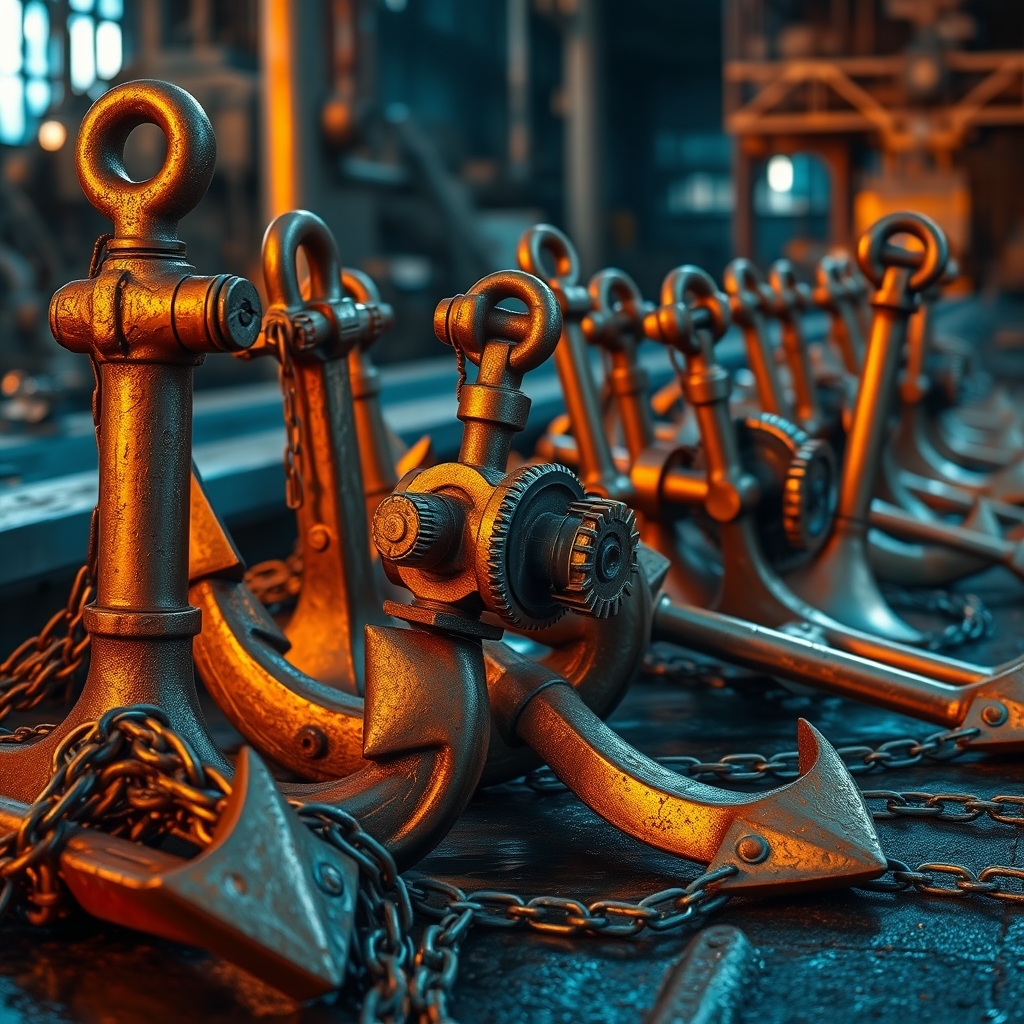
Anchors are the unsung heroes of every boat and ship—those heavy lumps of metal that bite into the seabed and keep you from drifting off wherever the wind and waves please. At their simplest, anchors stop your vessel from wandering, giving you a solid point of rest in a restless world of water. But don’t let that simplicity fool you; choosing the right anchor isn’t just about heft and shape. It’s about matching the anchor’s design to your boat, the seabed, and the conditions you’re facing so it can do its job without drama.
Why fuss over the right anchor? Because your entire vessel’s safety and stability rides on it. A poor choice means you could drag anchor or worse—lose your hold when you need it most. From the classic stockless anchor on giant merchant ships to the lightweight Danforth anchors beloved by small boaters, each type has its sweet spots and blind spots. Knowing which one fits your specific situation can make all the difference between a chilly night securely moored or a white-knuckle battle with the elements.
In this article, we’ll roll up our sleeves and get into the nuts and bolts of anchors: the different types you’re likely to encounter, the key parts that make them tick, and best practices for handling your anchor chain like a pro. Whether you’re a weekend skipper or a seasoned mariner, understanding these basics lets you stop guessing and start anchoring with confidence. Let’s dive in and see what really keeps your boat put where you want it.
Types of Anchors: Pros and Cons
Anchors might seem like simple lumps of metal, but each type is a finely tuned tool designed for specific seabed conditions and vessel needs. Picking the right one makes all the difference between a secure mooring and a boat drifting helplessly in the night.
Stockless Anchor
Let’s start with the stockless anchor — the stalwart of commercial shipping. Picture a heavy, flattish chunk of steel with no stock (that’s the crossbar), but with massive flukes that dig in when it hits the bottom. The design evolved to save space and simplify handling on big ships. Its compact shape lets it stow neatly against the ship’s hull, a boon when deck room is tight and every inch counts.
The trade-off? While stockless anchors do a fair job in most seabeds, they don’t grip well in soft mud. Imagine trying to sink a shovel into thick oatmeal — it just won’t hold. But for rocky or firm bottoms, and when you need a reliable, easy-to-manage beast for large vessels, the stockless anchor stands tall.
Danforth (Fluke) Anchor
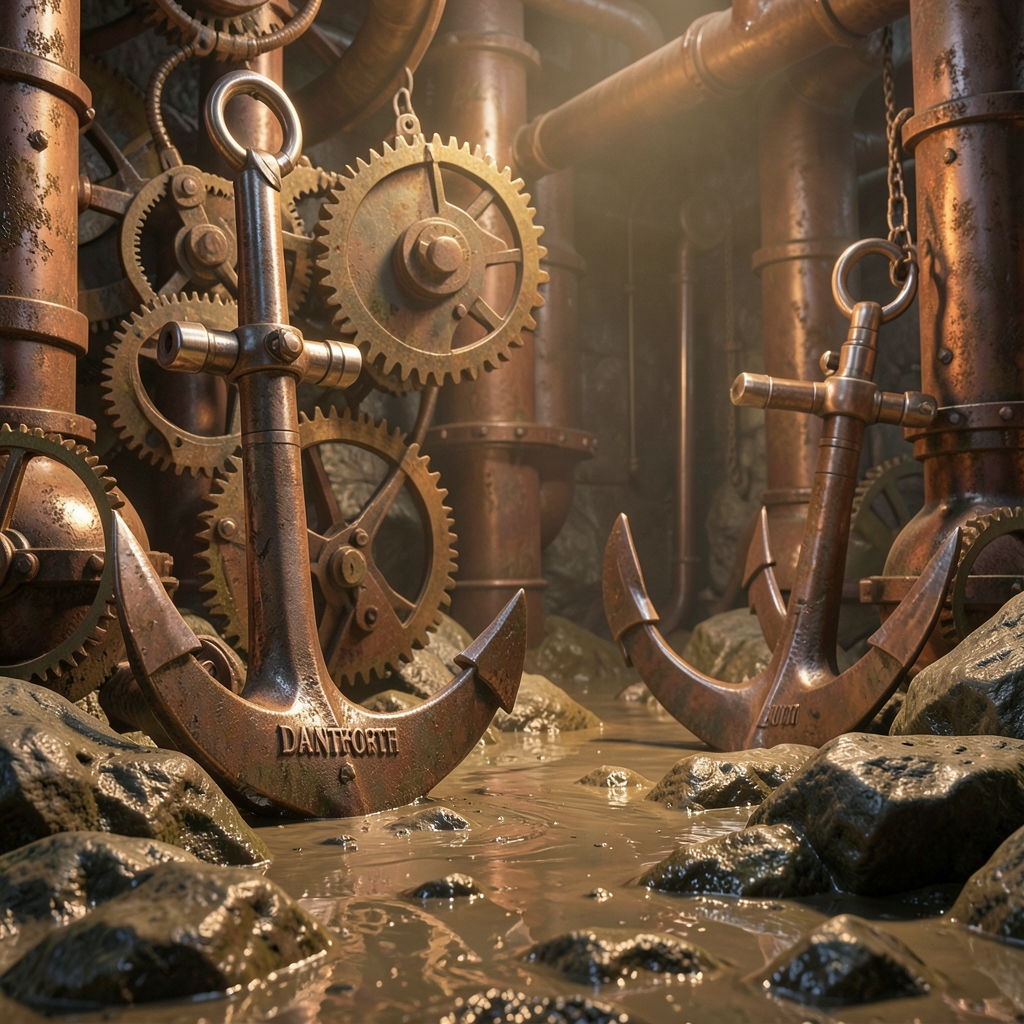
Next up is the Danforth, often called a fluke anchor. This one’s a classic favorite for smaller boats, the kind you might trailer down to your favorite fishing spot. Think of it as a lightweight, almost springy device with broad, flat “flukes” that slice into sand and mud like a garden trowel scratching fresh soil.
Its genius lies in excellent holding power where the bottom is soft to medium — sandy beaches, muddy bays. It digs in fast and stays put. However, if you’re dropping it onto rocks or thick grass, it struggles to bite, more likely to slide than settle. The Danforth shines in calm to moderate conditions, combining efficiency and ease of use with a weight that won’t break your back.
Other Anchor Types (Brief Overview)
Beyond these two workhorses, the world of anchors is buzzing with innovation. Modern designs—think ultra-light, quick-setting shapes often made from high-strength alloys—aim to get you anchored securely with less weight and hassle. Some look like futuristic art pieces, but underneath is solid engineering that improves bite and holding power on tricky surfaces.
There’s a lively debate among experts about the “best” anchor. It boils down to vessel size, seabed type, and how often you haul anchor. Traditional anchors are like reliable old friends; new designs are the nimble, problem-solving newcomers. Whichever you choose, knowing your waters and your boat’s demands is the key to picking the right one — a decision that can make the difference between a peaceful night at anchor and an unwanted drift.
Key Components of an Anchor and Their Functions
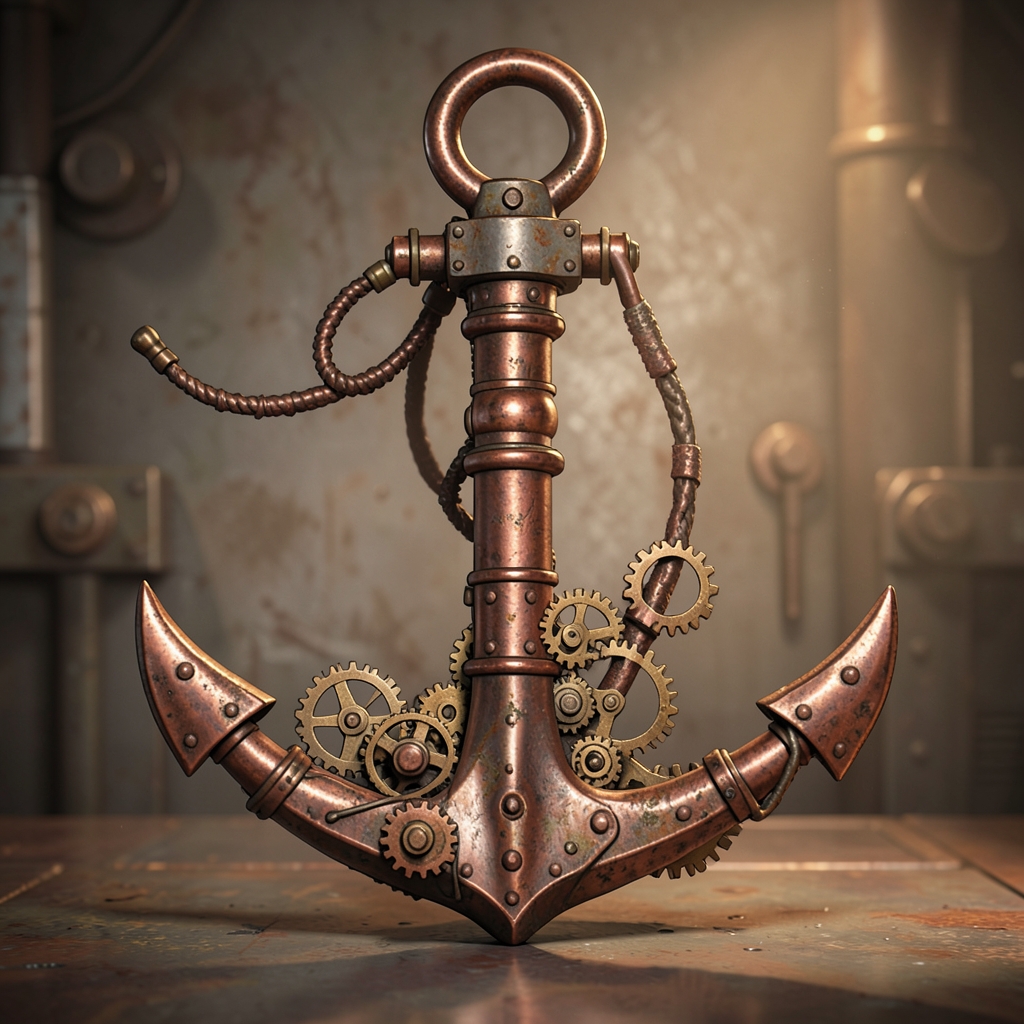
Let’s break down what makes an anchor more than just a heavy lump of metal tossed into the sea. Each part plays a role — like players in a carefully choreographed dance to hold your vessel steady against wind, waves, and currents.
Shank
Think of the shank as the backbone — the long, sturdy shaft that connects everything: the flukes (the biting bits) at one end and, often, the stock at the other. It’s the lever arm that helps the anchor set into the seabed when you pull on the rode. When you haul the anchor back onboard, the shank takes the brunt of the strain. It has to be tough, straight, and well-made to avoid bending or breaking under heavy loads.
Crown
Nestled at the base of the shank, the crown is a quiet hero. Its job? Distributing the load so the flukes can dig in deep. When the anchor hits the bottom and the boat pulls, the crown helps tilt the anchor just right, making sure the flukes bury themselves firmly into the sand or mud instead of skimming over it. Without a solid crown, your anchor might just skate along the seabed instead of grabbing hold.
Stock
The stock is like the anchor’s guiding hand. Mounted perpendicular to the shank on some types, it acts as a sort of keel to orient the flukes so they land at the right angle to penetrate the seabed. If the anchor lands flat or wrong side up, those flukes can’t bite. The stock ensures the anchor “knows” which way to fall and sets quickly. On stockless anchors, you won’t see a stock — they rely on other ways to find their footing.
Fluke
Here’s where the action happens. The flukes are the broad, flat plates that actually dig into the seabed. They’re the anchor’s claws, biting into mud, sand, or gravel to hold your boat in place. In a Danforth anchor, those wide flukes make the anchor lightweight but mighty in gripping soft bottoms. The better the flukes penetrate and hold, the less chance you’ll drag when the wind pipes up or tides shift.
Hawsehole
The hawsehole is the anchor’s passageway — a hole where the chain or rope passes through, either on the anchor itself or the bow of the vessel. Seems simple, right? But there are plenty of myths here, like whether the hawsehole can cause friction damage or “jam” the chain. In reality, as long as it’s properly sized and maintained, it’s just a clean, smooth route to keep the rode running free.
Windlass
Finally, the windlass is the muscle and brains behind anchor handling. Mounted on deck, this mechanical device raises and lowers the anchor with power and control. Picking the right windlass isn’t just about horsepower; it must be rated for your anchor’s weight and rode length to avoid straining parts or risking failure. Remember, a windlass doesn’t automatically make dropping or weighing anchor easier — good technique and knowing your gear remains key.
So, every part — from the shank to the windlass — has a practical job to do in getting your anchor set firmly and safely. Knowing how these bits work together isn’t just shop talk; it’s your ticket to confident, hassle-free mooring. And next time you drop anchor, you’ll see the machinery beneath the surface is a finely tuned team, not just a heavy ball dropping into the deep.
Anchor Chain: Best Practices for Safe Mooring
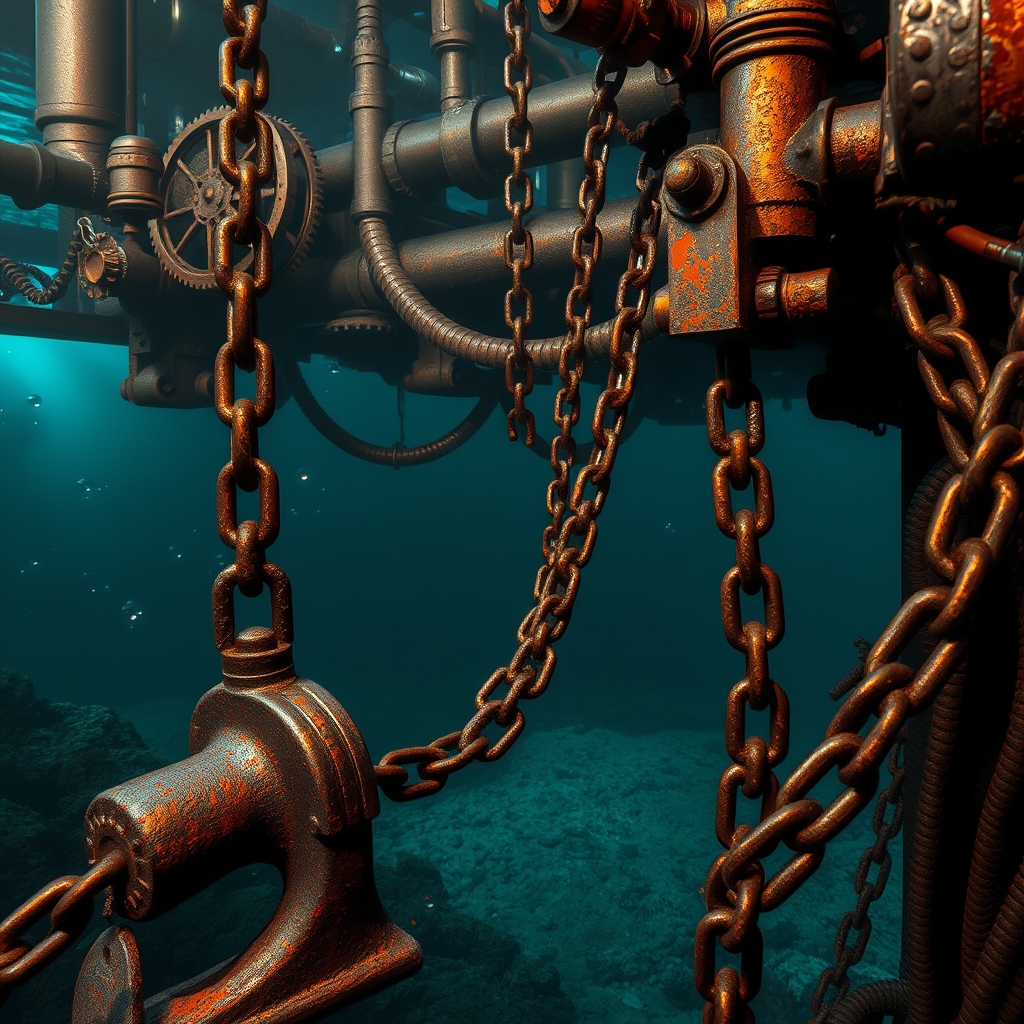
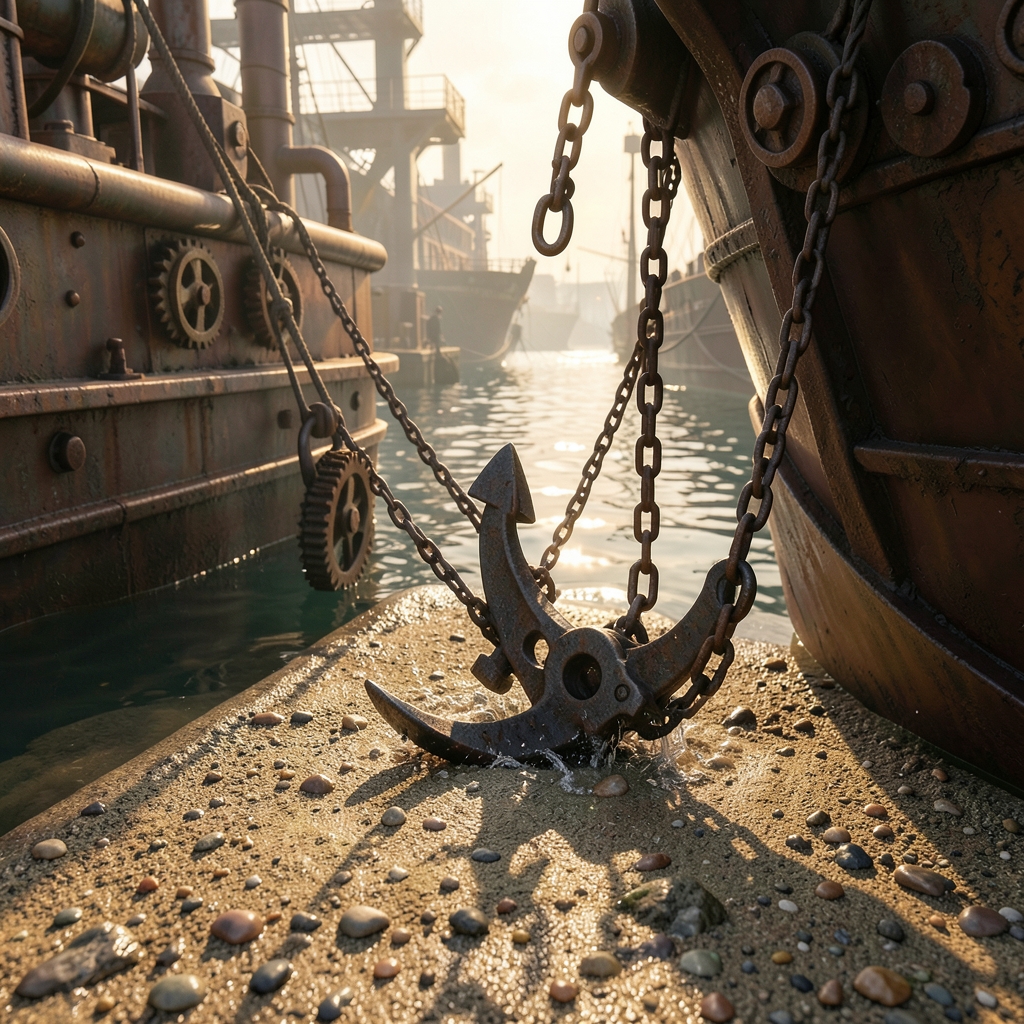
If you think the anchor alone holds your boat steady, think again. The chain connecting that anchor to your vessel plays a starring role in keeping you put, especially when the wind picks up or the waves get restless. It’s not just a link between anchor and boat — it’s the unsung hero that smooths out the ride and keeps your anchor biting into the seabed.
Why Use a Chain?
A chain isn’t just heavy metal dragging down your anchor; it’s a clever tool that adds weight close to the seabed. This weight creates a catenary curve—a gentle sag that works like a shock absorber, reducing the angle of pull on the anchor. Think of it as holding down a tent peg with a heavy rock tied to your rope instead of just the rope alone. The chain also takes the brunt of abrasion from the rough seabed, protecting your rope from wear and tear that could leave you stranded.
How Much Chain Should You Let Out?
The rule of thumb here is all about scope—the ratio between the length of chain you pay out and the depth of water plus any height above the waterline. Typically, you want a scope of about 5 to 7 times the depth under normal conditions. So, if you’re anchored in 10 feet of water, you’d pay out 50 to 70 feet of chain. More scope means a gentler pull on the anchor, helping it dig in deeper and hold better.
When the weather turns rough—strong winds, currents, or an uneasy seabed—give yourself more scope. It’s like giving your anchor some slack to get a better grip, preventing the dreaded “drag” that sends your boat drifting. And if the bottom is tricky—say, full of weeds or rocks—you might need to adjust your chain length to get the best hold.
Keep Your Chain in Tip-Top Shape
Even the toughest chain takes a beating. Saltwater corrodes steel over time, and constant rubbing on rocks or rusty moorings eats away at links. Regular inspection is your best defense. Look for thinning links, rust buildup, or any deformations that weaken the chain.
Give your chain a rinse with fresh water after salty trips and apply a light coating of corrosion inhibitor if you can. Lubrication might sound fancy, but think of it as oiling the hinges on a stubborn gate—it keeps things working smoothly and lasts longer. A clean, well-maintained chain isn’t just about longevity; it’s about safety. A chain failure at the wrong moment can mean a long, sleepless night.
Stopping the Drag in Rough Weather
Setting your anchor with the right amount of chain is your first line of defense. But you can go further. Snubbers—elastic ropes attached between the chain and the boat—act like shock absorbers. They reduce the strain on the chain and anchor and soften the jerks from waves. This cushion keeps your anchor planted and lets you sleep easier.
In the end, your chain isn’t just a piece of gear; it’s a vital part of the anchoring system. A properly sized and maintained chain, paid out with the right scope, gives your anchor the best chance to hold firm through calm days and storms alike. So, treat your chain with respect—it’s the quiet grunt behind every safe mooring.
Mooring Techniques and Best Practices
Anchoring a boat isn’t just about dropping the anchor and hoping for the best. It’s a hands-on process that demands attention to detail and respect for the gear beneath you. Think of it like parking a big truck on gravel—you want the wheels to grip solidly, so you don’t slide off when the road shifts.
Proper Anchor Setting
Start by picking the right spot: a seabed type the anchor actually likes—sand, mud, or gravel. Then, ease the boat forward slowly as you let the anchor down. Don’t just drop it and yank the line tight; you want the anchor to hit bottom gently and then dig in as you give a little backward pull. If you feel it slipping, ease off and try again. A properly set anchor should bite in quick and hold firm like a claw gripping steel.
On soft mud or sand, the flukes or tips of the anchor need to bury themselves. So pay attention to the direction of pull—anchoring with the wind and current working together lets the anchor dig deeper and hold stronger. Rocky or grassy bottoms can be trickier; you may need a different anchor design or an extra bit of chain weight to help the flukes find their grip.
Securing the Vessel
Once the anchor is set, your attention turns to the mooring lines and chain—the lifelines of safe holding. The chain isn’t just a weight; it acts like a shock absorber, smoothing out sudden pulls from gusts or waves, and keeps the pull angle low on the anchor. Attach a snubber or heavy-duty rope between the chain and the boat to soften the jerks your windlass doesn’t love.
Keep an eye on the scope—the length of chain or rope you pay out relative to the water’s depth. The classic rule of thumb is around five to seven times the depth, giving the anchor plenty of slack to settle. Too short, and your anchor pulls upward, risking it breaking free. Too long, and you may risk snagging on underwater obstacles or tangling your gear.
Monitoring and Adjusting Anchor Position
Anchoring isn’t a “set it and forget it” game, especially in changing conditions. It pays to be patient at first, watching how the boat swings and how the anchor behaves. Small shifts can show if the anchor’s holding or dragging. Use landmarks or, better yet, GPS and anchor alarms to track your position.
If you spot movement that suggests slipping, reset the anchor promptly before the situation escalates. In rough weather, increasing scope or adding extra mooring lines can help keep the boat snug.
Anchoring is a tactile, dynamic task—feeling the chain’s tension through your fingertips, hearing the gentle scrape as the anchor settles, sensing the boat’s slow pivot in the current. Nail the basics, and you’ll find it’s as much art as science, a moment of calm control over the powerful forces around you. Keep your eyes sharp, your lines tidy, and your anchor set firm—and the sea will feel a little less like chaos and a lot more like home.
Common Questions and Myths about Anchors and Anchoring
When it comes to anchors and anchoring gear, a few stubborn myths tend to circle around like seagulls over a working dock. Let’s clear the air and talk practical, so your next mooring isn’t a guessing game.
Myths about Hawseholes and Windlasses
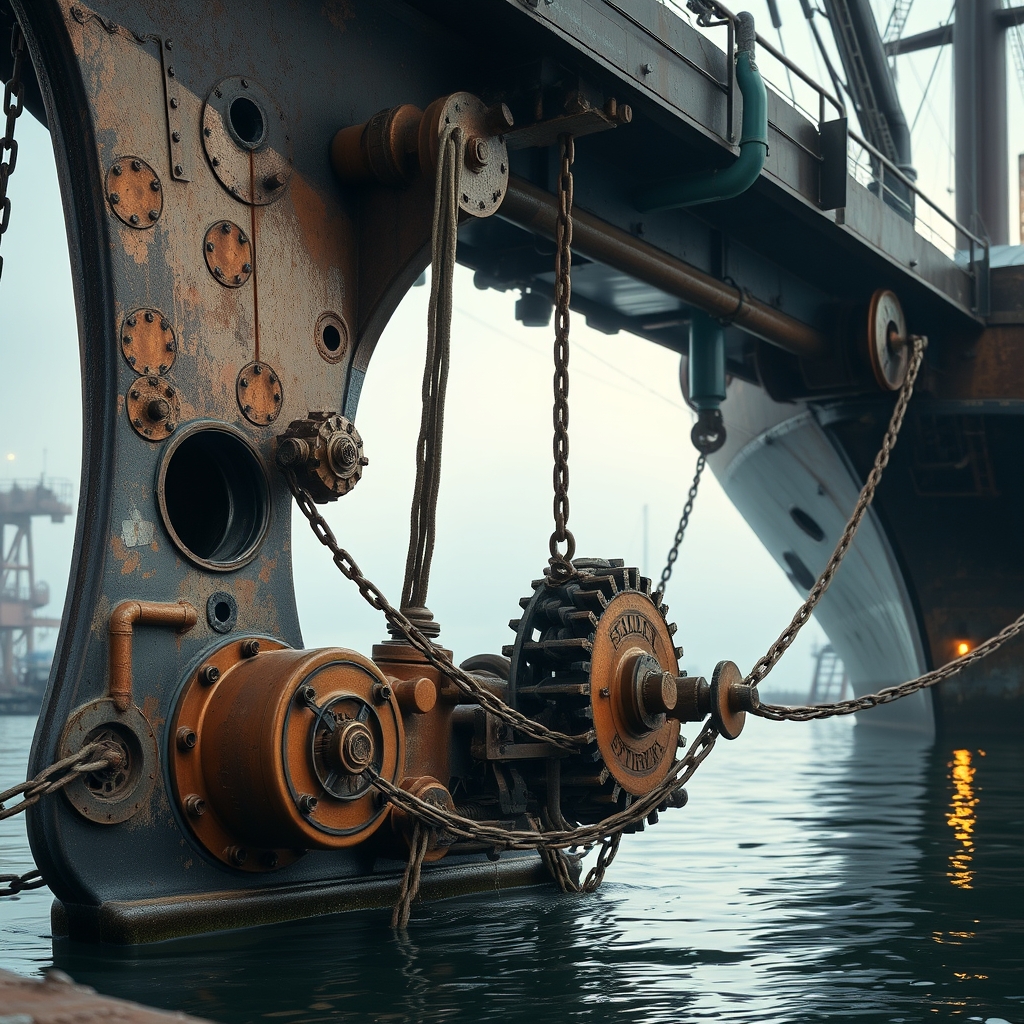
First up: Hawseholes. These are the holes in the bow where the chain passes through. Some folks think hawseholes guide the anchor into the water perfectly straight or somehow protect the chain magically. In reality, they’re just the path for the chain or rope—a simple, functional hole in steel. If the chain snakes around or gets hung up there, it’s not the hawsehole’s fault; usually, it’s poor handling or fouled gear.
Now, windlasses—the muscle behind hauling your anchor up and down. Here’s where the most confusion lies. Some believe a windlass rated for a certain weight means it can effortlessly haul any anchor of that size. Not quite. Windlass ratings refer to the maximum load they can handle under ideal conditions, not how fast or easily they’ll drag up every chunk of seabed mud or tangled kelp along with your anchor. If the anchor’s stuck or the seabed is heavy with debris, your windlass will work harder, but never quite like a factory robot. Also, having a windlass doesn’t mean you get to slack off on anchor handling skills—it’s a tool, not a magic button.
FAQs on Anchor Chain Management
How much chain should you pay out?
The rule of thumb is simple: aim for a scope of about 5 to 7 times the depth of the water. That means if you’re in 10 feet of water, you pay out 50 to 70 feet of chain and rope combined. Why so much? Because that extra length lies on the seabed, creating a catenary curve—it’s not just dead weight but a shock absorber that keeps your anchor from pulling straight up and breaking free. In rough weather, add more scope. If you cut corners here, you’d better be ready for your anchor to drag like a stubborn old mule.
How do you keep the chain safe and in good shape?
Regular inspection is key. Saltwater and iron aren’t friends, so check your chain for signs of rust, pitting, or cracks. Give it a good rinse in fresh water when you can, and don’t forget basic lubrication on the swivel joints if your chain has them. Over time, even the toughest steel needs a bit of TLC to keep you moored safely.
How can you prevent dragging or losing your anchor hold?
Proper setting is the first defense — don’t just drop the anchor and hope for the best. Once down, motor back slowly to dig the flukes into the seabed firmly. Use a snubber line if you can: it’s a stretchy piece of rope that absorbs jolts and reduces strain on your windlass and chain. Always keep an eye on your chain scope and watch for any unexpected movement. Technology like anchor alarms and GPS can be helpful, but nothing replaces a good old-fashioned watch.
Anchoring is straightforward once you understand the basics, but there’s no substitute for respect—respect for your gear, the environment under your boat, and the forces at play. The myths won’t keep you anchored; practical know-how and good habits will. So next time you drop anchor, do it like a pro who’s been around the block—and the bay—more than a few times.
Conclusion
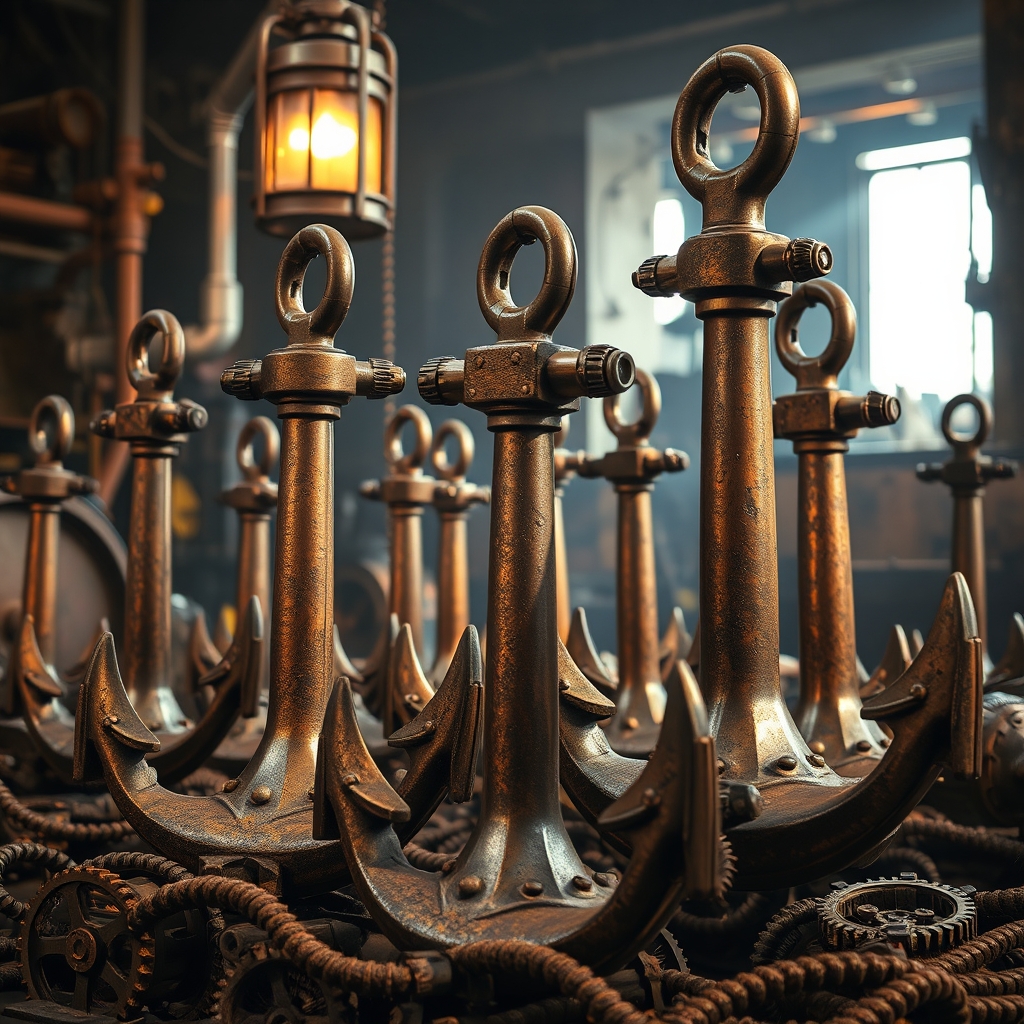
Anchors might seem like simple lumps of metal, but choosing the right one is a game-changer when it comes to keeping your boat safe and steady. Stockless anchors shine on big ships with their compact, no-nonsense design, though they stumble a bit in soft mud. Danforth anchors, with their broad flukes, dig in deep and hold tight on sandy or muddy bottoms — perfect for smaller boats craving reliable grip. And don’t forget the new kids on the block: modern anchors engineered to set faster and hold better, proving that even time-tested gear can get an upgrade.
But it’s not just about the anchor itself. Understanding what makes an anchor tick—the shank as the sturdy spine, the crown digging into the seabed, the stock orienting the whole system, and the flukes doing the heavy lifting—helps you see the anchor as more than a weight. It’s a finely tuned tool designed to wrestle with nature and keep your vessel where it belongs.
Last but not least, the chain isn’t just dead weight. Its heft and catenary curve are your ally against chafing and dragging, acting like an anchor’s long leash. Knowing how much chain to pay out, keeping it in good shape, and setting your anchor right will save you headaches and sleepless nights. Treat your gear with respect, pay attention to conditions, and don’t cut corners.
Choosing the right anchor and mastering its use isn’t just about gear—it’s about safety, confidence, and enjoying time on the water without looking over your shoulder. So next time you ready your boat, think of your anchor not as an afterthought, but the steady hand holding you fast. After all, it’s the humble hero beneath the waves that keeps your journey grounded.












-
 Jigsaw Puzzles
Majestic Moose in Forest Watercolor Jigsaw Puzzle 250 | 300 | 500 Brikker
Price range: kr 348,00 through kr 439,00 Select options This product has multiple variants. The options may be chosen on the product page -
 Jigsaw Puzzles
Elegant Pig Zodiac Watercolor Jigsaw Puzzle 250 | 300 | 500 Brikker
Price range: kr 348,00 through kr 439,00 Select options This product has multiple variants. The options may be chosen on the product page -
 Jigsaw Puzzles
Norwegian Stave Church Abstract Jigsaw Puzzle 250 | 300 | 500 Pieces
Price range: kr 348,00 through kr 439,00 Select options This product has multiple variants. The options may be chosen on the product page